
What does EASM help your team identify?
Unknown assets
Find domains, subdomains, applications and services that are not part of the company known inventory.
Priority vulnerabilities
Understand which exposures represent the greatest risk and need attention first.
Shadow IT
Identify assets and services created outside the security team processes and controls.
Attack surface changes
Detect new assets, ports, services and relevant changes as they appear.
Recurring exposures
Track vulnerabilities over time and spot when something already fixed comes back.
Risk without context
Centralize information on assets, vulnerabilities and exposure to support prioritizing what really matters.
Key features of EASM
Most critical vulnerabilities
Identify the highest-impact vulnerabilities and prioritize what must be handled first.
Open Vulnerabilities
0
52 open vulnerabilities
Critical Vulnerabilities
0
3 critical vulnerabilities
Exposed ports and services
View ports, services and technologies reachable over the internet and follow changes that widen your attack surface.
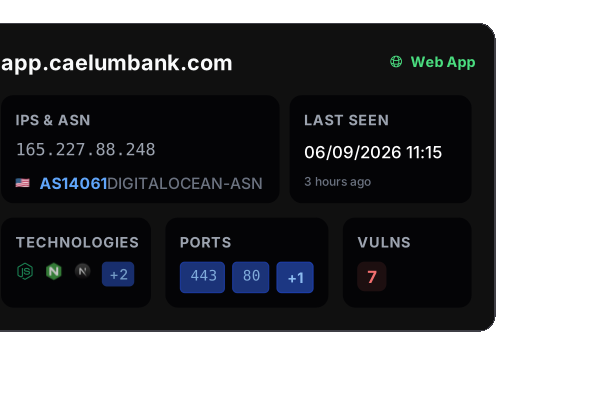
Assets off the radar (Shadow IT)
A test environment that went up and stayed online, a service created by another department, an old server nobody switched off: QuimeraX brings these assets together in a single external inventory, alongside the ones the team already knows about.
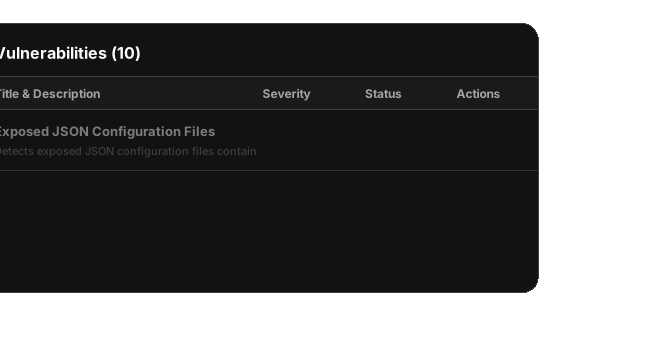
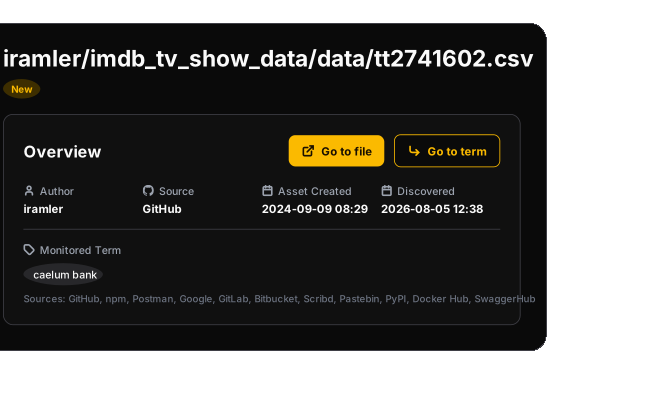
Exposed files and data
Identify publicly accessible files, directories and sensitive information that may pose a risk to the organization.
Who uses
QuimeraX
in practice
“Before QuimeraX, we had isolated tools and a lot of operational noise. QuimeraX gave us far deeper visibility. We can identify external exposures, compromised credentials and risks to our brand long before they turn into real incidents. Today we have contextualized intelligence and genuine risk-based prioritization.”

See what is
exposed in your company.
Run an initial assessment and identify assets of your organization that may already be visible externally.